

Student Visa in the UAE: Documents, Timeline, Process
For many families, the student visa in the UAE is the most stressful part of the whole journey. Admission still feels understandable: there is a university, a programme, a list of documents, and a visible decision point. The visa stage feels less predictable, which is exactly why anxiety tends to rise here.
In reality, the UAE student visa does not exist separately from admission. It is closely tied to the university, the admission letter, confirmation of the student's place, and a set of administrative steps that have to move in the right order.
In this guide, we will look at how the student visa process usually works in Dubai and the other emirates, who actually handles it, which UAE student visa documents are commonly needed, how long the process can take, and what families can do to avoid the most common delays.
If you first need the wider picture of universities, admission routes, and budget planning, it helps to keep our article about higher education in the UAE nearby. This piece goes deeper into the visa stage itself and the practical logic around it.

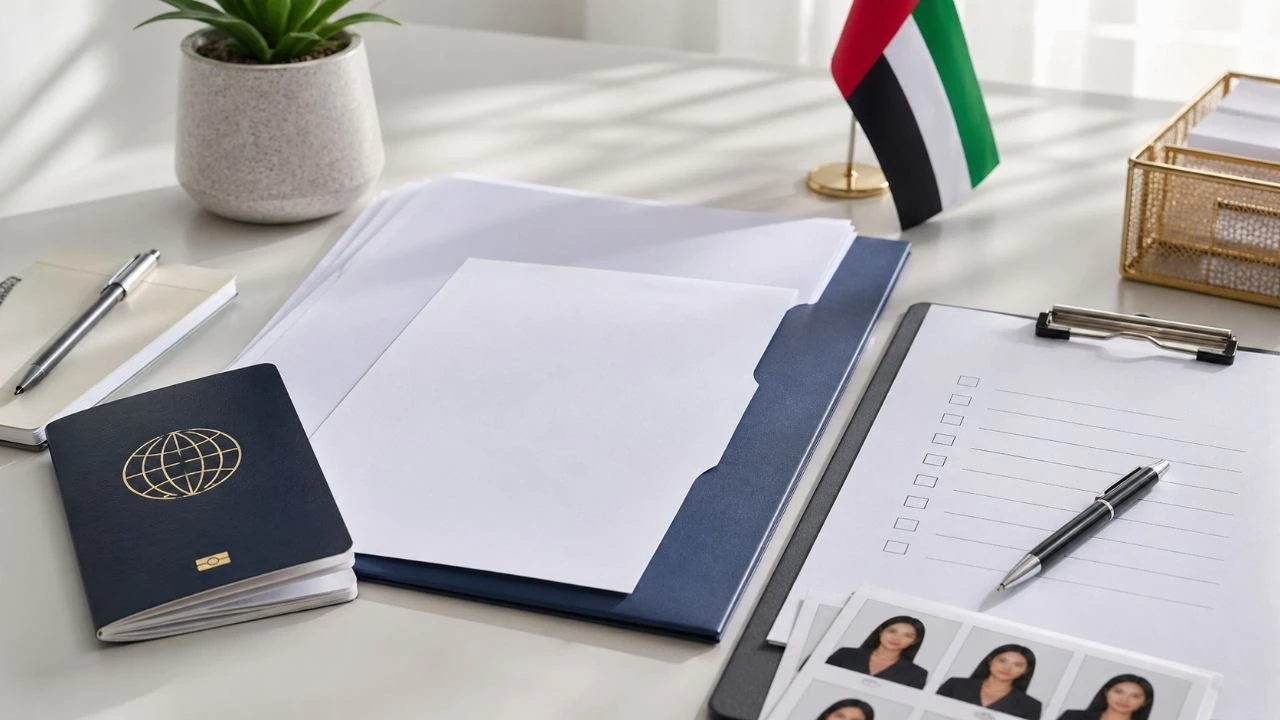
Who handles the student visa in the UAE
This is the main question, and it is the right place to begin.
According to official UAE guidance, a student residence visa is issued on the basis of confirmation from the university or institute. In other words, the university is not a side detail in the process. It is central to how the student route normally works.
Put simply:
- the student does not invent the route from scratch;
- the visa process is usually tied to the university's own administrative logic;
- that is why the visa should never be separated from admission.
When families ask whether it is possible to get a student visa through the university, the short answer is yes. That is usually the working structure behind the student route in the UAE.
How to get a student visa in the UAE without unnecessary pressure
The question "how to get a student visa in the UAE" often sounds as if the answer should be a short list of forms. In practice, it is much more useful to think in terms of process order, not just paperwork.
The working sequence usually looks like this:
- first the university is chosen and the admission route begins;
- then the student receives the admission letter and confirms the place;
- after that, the university and the family move into the visa stage;
- in parallel, housing, arrival, and the first days on the ground have to be planned.
The safest way to get a student visa in the UAE is not to treat it as a separate task and not to leave it until the final moment. When university admission, visa steps, and relocation are planned together, the whole route becomes easier to control.
If you are still entering the topic of admission, it helps to read this guide together with our article on university admission in the UAE. These two stages are closely connected in real life.
When to start the visa stage
One of the most common mistakes is assuming that the student visa in the UAE only needs attention at the very end, when everything else is settled. In practice, it needs to be considered earlier than many families expect.
The safer logic is this
- the university and programme are already chosen;
- the admission package is already assembled;
- the admission letter has been issued;
- the student's place has been confirmed;
- the visa process starts together with the other post-admission steps.
That is why the phrase "we'll sort the visa out later" often costs valuable time. The later the family starts understanding the logic of the visa stage, the more likely it becomes that the move, the housing, and the final weeks before departure will all become compressed at once.
Three stages worth thinking about in advance
Before the admission letter
The visa itself is not launched yet at this point, but this is where future manageability is built. It helps if the family already understands which university is involved, how quickly the admission route is moving, and what the likely next steps will be once the offer is issued.
After the admission letter
This is when the visa topic becomes a real operational task rather than a theory. It is better not to lose time between the admission letter, the deposit, document collection, and the first administrative actions.
After arrival
Many people think the visa process ends with the visa approval itself. In reality, after arrival there are still administrative and practical steps without which the student cannot settle into normal university life smoothly.
Which UAE student visa documents are usually needed
The exact package depends on the university, the student's status, and current administrative requirements. Still, there are documents that appear in most cases.
The basic package
- passport;
- confirmation of admission or documents issued by the university;
- photographs in the required format;
- proof of payment or deposit, where that is part of the route;
- university visa forms;
- additional papers requested by the university or the authorities.
According to official UAE government information, the student residence visa process requires a document from the university or institute that confirms the student has been accepted. That is one of the clearest reasons why the visa stage is tied so closely to admission.
Sometimes families assume the main task is simply to upload the passport and wait. In practice, what matters more is whether the package is complete and whether it is submitted in the right order and in the format the university expects.
What is especially important to check
- whether the personal data matches across all documents;
- whether there are any expired scans or unreadable files;
- whether every signature and confirmation requested by the university is in place;
- whether the medical and other required steps are being postponed too close to departure.
Table: how the visa stage usually works
| Stage | Who is involved | What usually happens | Where mistakes appear most often |
|---|---|---|---|
| Preparation after the admission letter | student + university + adviser | the place is confirmed and the visa package is assembled | the family delays the start after admission |
| Document submission | student, family, or university | forms and confirmations are sent | individual files are missing or the scans are weak |
| Administrative processing | university and relevant services | the visa process is launched | the family waits without checking status |
| Arrival and registration steps | student + local support side | required steps are completed after arrival | not enough time is left for operational tasks |
| Final documents | university, services, and student | the process is completed and local identification steps are finished | people assume one letter or one stamp is the end of everything |
It helps to think of the visa not as one paper, but as a chain of actions. That makes it easier to understand why even a small mistake at the beginning can create pressure much later.
How long does a student visa in Dubai usually take
This is one of the most popular search questions, but it is also the easiest place to say too much. The honest answer is simple: the exact timing depends on the university, the season, the quality of the document package, and the way the process moves through the required steps.
That means the question "how long does a student visa in Dubai take" cannot be reduced to one universal number.
What really affects the timing
- how quickly the family gathers the full document set;
- whether the university has extra administrative stages;
- the time of year when the process starts;
- whether the package needs revisions;
- how well the visa stage is synchronised with post-arrival tasks.
Why delays appear so often
In most cases, the problem is not a major disaster. It is a collection of small inconsistencies. The family believes everything is already ready, and then it turns out that one detail is still unresolved.
- one document was sent in poor quality;
- some information does not match across the files;
- the deposit was paid too late;
- housing and flights were planned before the real visa status was clear;
- communication with the university moved in fragments instead of through one responsible person.
These delays are frustrating because each one looks small on its own. Together, however, they start pressing on both the timeline and the family's emotional state. That is why the process feels much heavier than the paperwork itself.
That also leads to a practical rule: do not buy tickets or build a rigid relocation calendar until the real status of the visa case is clear. Flexible planning is usually cheaper than correcting rushed decisions later.
Practical takeaway
The safest strategy is not to assume instant processing, but to enter the visa stage early and with time in reserve. If everything is prepared correctly, that reserve will simply make the process calmer. If something needs to be corrected, it will protect the overall move.
What to prepare before the visa stage begins
The better the family is prepared before the process starts, the calmer the visa stage becomes. It helps to check in advance:
- passport validity;
- readiness of the final academic package;
- who in the family is responsible for communication with the university;
- the order of deposit and other mandatory payments;
- the housing plan and the intended move date.
These are not minor details. They often determine whether the process keeps moving forward or starts getting stuck at every step.
What happens after the visa process is launched
When families see the visa system for the first time, it often seems that after document submission the only thing left is waiting. The picture is wider than that.
After the visa stage starts, the following questions usually appear at the same time:
- when to plan the flight;
- when to book housing;
- which steps happen after arrival;
- how the visa, Emirates ID, and other required actions are connected;
- who supports the student on the ground.
If this part is not understood in advance, the student can arrive already exhausted by uncertainty. If the preparation is solid, the move tends to feel much smoother.
What matters after arrival
Families often assume that once the visa confirmation is received, the difficult part is over. From the student's point of view, however, the first days after arrival are no less important.
- complete the required registration and administrative steps;
- keep up with the university's operational schedule;
- connect housing, transport, and campus logistics;
- sort out practical everyday issues quickly enough to begin studying without extra stress.
That is why good support after arrival is often valued almost as much as help with the visa package itself.
What parents usually track, and what the student should own
For Russian-speaking and CIS families, this is one of the most helpful sections because anxiety often comes less from the documents themselves and more from unclear roles inside the family.
Parents usually find it easier to stay responsible for:
- the overall sequence of steps;
- financial actions and confirmations;
- storing and checking important documents;
- communication on the key organisational issues.
The student, meanwhile, should gradually take ownership of:
- understanding university requirements;
- personal documents and deadlines;
- part of the communication;
- practical readiness for the move and life after arrival.
When responsibilities are distributed early, the visa for studying in the UAE stops feeling like a black box. The family gets a sense of control, and the student starts building real independence.
For many families, this also lowers tension. Parents do not try to manage every small detail manually, and the student does not feel excluded from a process that directly affects their own move.
This becomes especially visible in the final weeks before departure. When roles are clear in advance, the family argues less, scrambles less, and wastes less energy on repeated clarifications.
For the visa stage, that almost always works better than last-minute pressure and chaotic attempts to control everything at once.
For both the student and the family, this makes the whole process much easier to understand.
The most common mistakes in the visa process
Mistake 1. Treating the visa as a separate task
In reality, the student visa in the UAE is a continuation of admission. If admission, the offer letter, the deposit, and housing are not treated as one chain, the visa stage becomes harder than it needs to be.
Mistake 2. Starting too late
Even if the university is already chosen, delaying the visa questions until the final weeks is a poor strategy. The later the start, the less space remains for corrections.
Mistake 3. Submitting an incomplete package
The most painful problem is usually not a dramatic rejection, but small flaws: a weak scan, a missing file, the wrong document name, or the wrong submission sequence.
Mistake 4. No single coordination point
If admission, visa, housing, and practical preparation all move separately, the process eventually starts conflicting with itself. One stage gets ahead while another is still unresolved.
Mistake 5. Underestimating the role of the university
Some families try to treat the student route as if it were an ordinary tourist or family visa. In the UAE, the student process is built around the university and its administrative logic.
What parents and students from Russia and the CIS should keep in mind
For many Russian-speaking families, the visa question becomes emotionally heavier than the academic one. That is normal: the stage involves many administrative details, dependence on timing, and uncertainty around the move itself.
A practical approach looks like this:
- decide early who is responsible for what;
- do not guess from forums and scattered comments;
- do not assemble the package by intuition;
- link the visa stage to admission and relocation;
- keep one person or one team close by who can guide the sequence consistently.
This is exactly the format in which the visa stage stops being a frightening unknown and becomes a manageable task.
Where Right Step is especially useful
Support during the visa stage is valuable not only because someone knows the list of documents. The more important value is that the family can:
- see the full path in advance;
- avoid losing time between the admission letter and the visa start;
- prevent typical mistakes in the package and sequence;
- connect the visa stage with housing, relocation, and the first practical steps after arrival.
If you already feel that handling this stage alone would create too much tension, the next reasonable step is to look at our visa support page.
If the admission logic is still not fully clear, it is useful to read this guide together with our article on university admission in the UAE.
FAQ
Who handles the student visa in the UAE?
In most cases, the visa stage is tied to the university and its administrative process. That is why it should not be treated separately from admission.
Which documents are usually needed for a student visa in the UAE?
Usually the package includes the passport, university documents, visa forms, photographs, and additional confirmations depending on the case. The exact list depends on the university and the current requirements.
How long does a student visa in Dubai take?
There is no single universal number. Timing depends on the season, the package quality, the university, and how quickly the required stages move forward. It is safer to plan with time in reserve.
Can I get the visa through the university?
Yes. This is the standard structure for the student route in the UAE.
What should I do after the admission letter?
Confirm the place, complete the financial and administrative steps, and move into the visa stage and relocation planning on time.
How can I get a student visa in the UAE without avoidable mistakes?
The safest approach is not to separate the visa from admission, to collect the documents early, to confirm the place on time, and not to delay the start of the visa stage.
Conclusion
The student visa in the UAE is not a separate formality at the end of the road. It is an important part of the entire sequence, from admission to actual relocation. The earlier you start seeing it as part of one connected process, the calmer and more controllable it becomes.
If you need not a generic tip but a manageable visa stage without unnecessary last-minute pressure, it makes sense to begin with support rather than guesswork. You can see how that works on the Right Step services page and through a free consultation.




 English
  Russian